When the scale of the environment and the scale of the ambition demand more than a standard commercial screen, LED is the answer
How LED displays differ from standard displays in professional environments
LED display formats

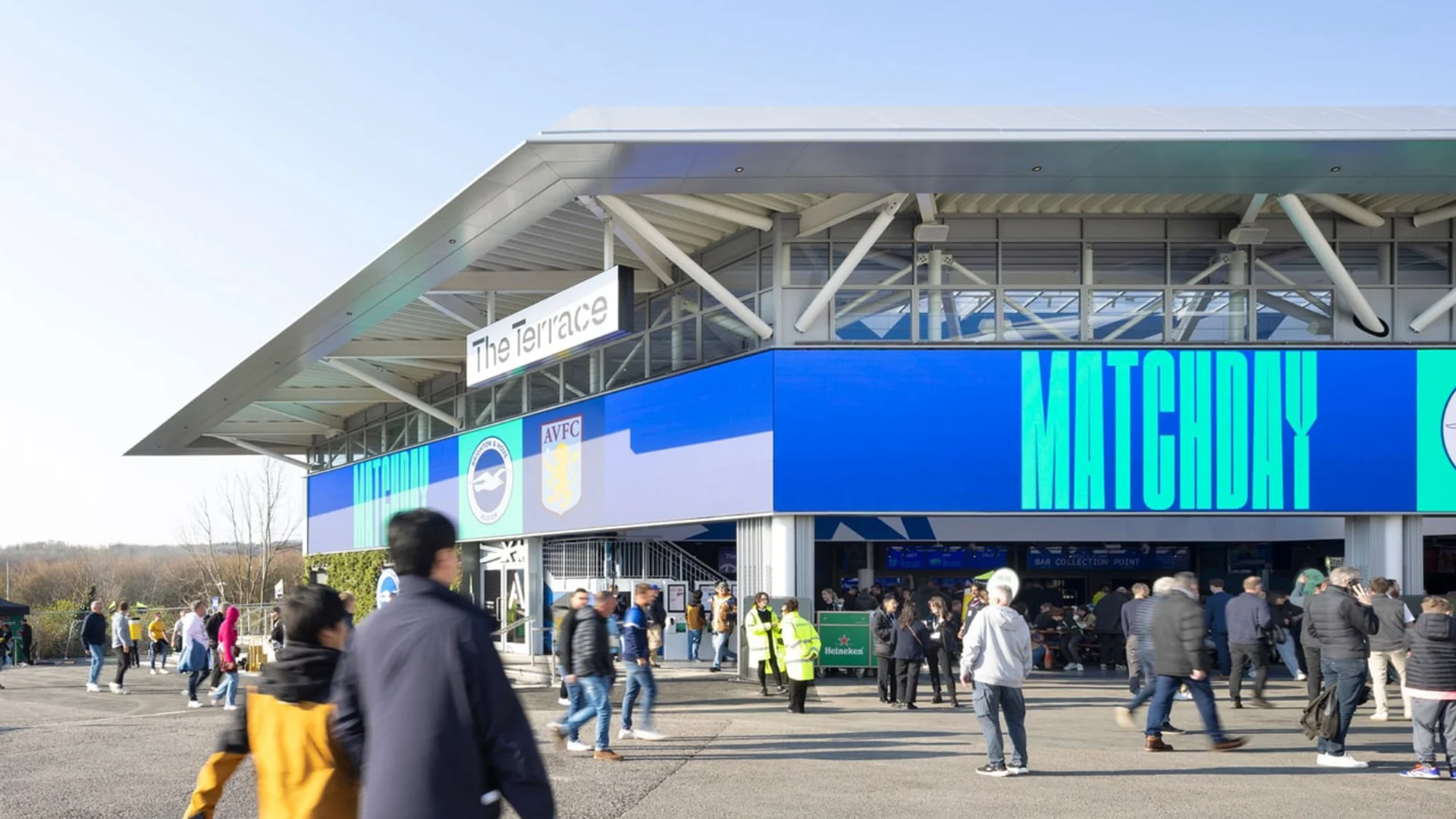
Awe-inspiring. From stadiums, retail flagships and more
LED displays are the ultimate showstoppers; delivering high-impact visuals in any environment
LED display technology has transformed what’s possible in large-scale visual communication — delivering brightness, resolution, scalability and design flexibility that standard display formats simply cannot match. In stadium concourses, large venue foyers, retail flagship environments, premium hospitality spaces and outdoor settings, LED creates the kind of visual presence that defines how a space feels and how a brand is perceived.
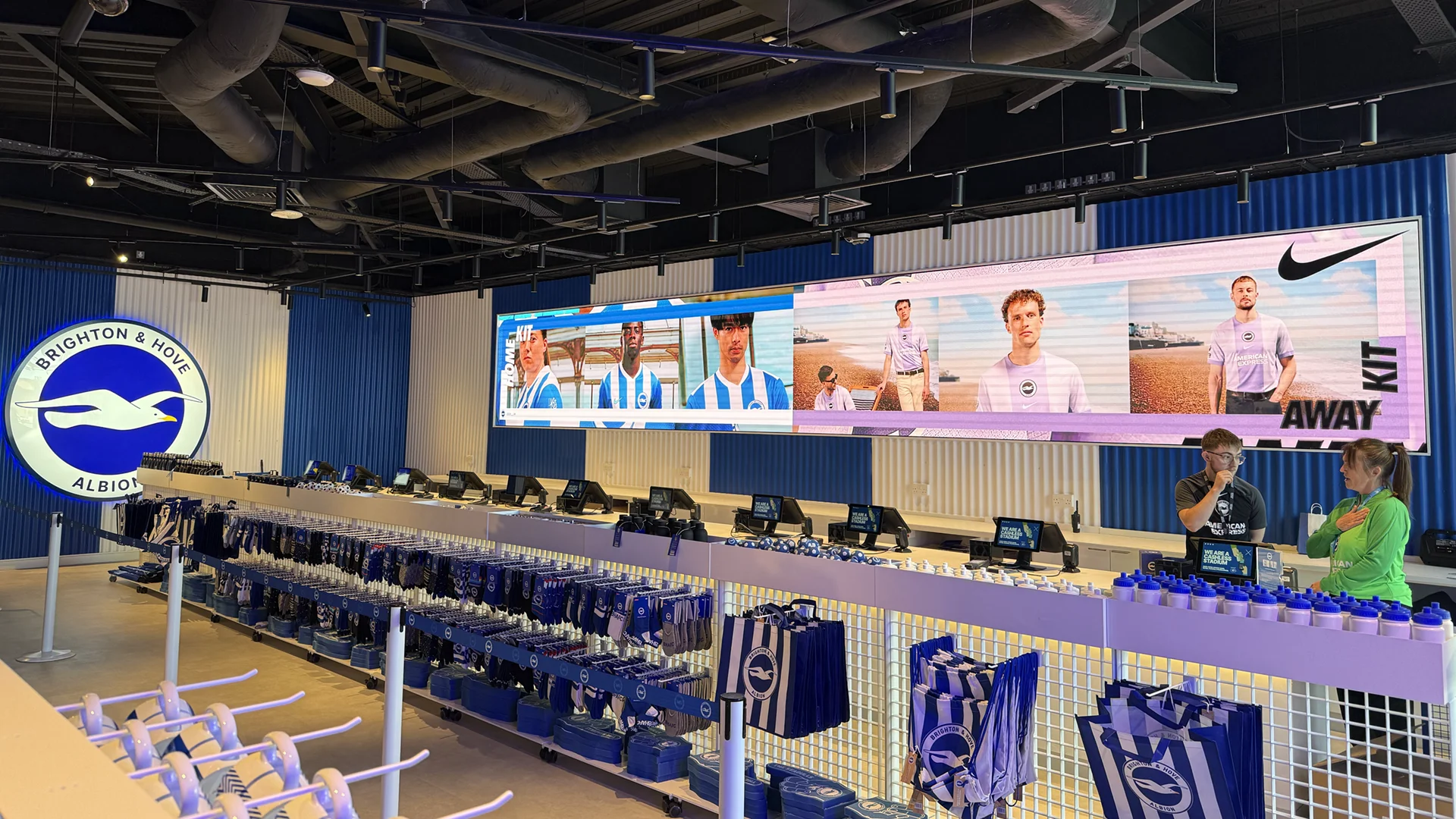
At Digital Messaging Company, we’ve installed LED solutions for Premier League football clubs, major entertainment venues, leading hospitality operators and blue-chip corporate clients. We understand both the technical requirements and the operational context; and we manage LED installations with the same rigour and accountability as every other element of our service.
For Marketing, Ops, IT and Digital teams, LED systems require a different understanding of signal distribution, processing and content management than standard displays. Our content and technical teams provide full documentation, training and ongoing management of the LED estate.
For Procurement, LED installations carry a higher initial capital cost than LCD display equivalents of similar scale — but with longer operational lifespans, modular replaceability (individual modules rather than whole screens) and lower total cost of ownership at large scale.
For Sustainability leads, modern fine-pitch LED offers significantly more light output per watt than earlier generations, and the modular nature of LED panels means maintenance rarely requires full replacement, reducing the e-waste profile of large installations.
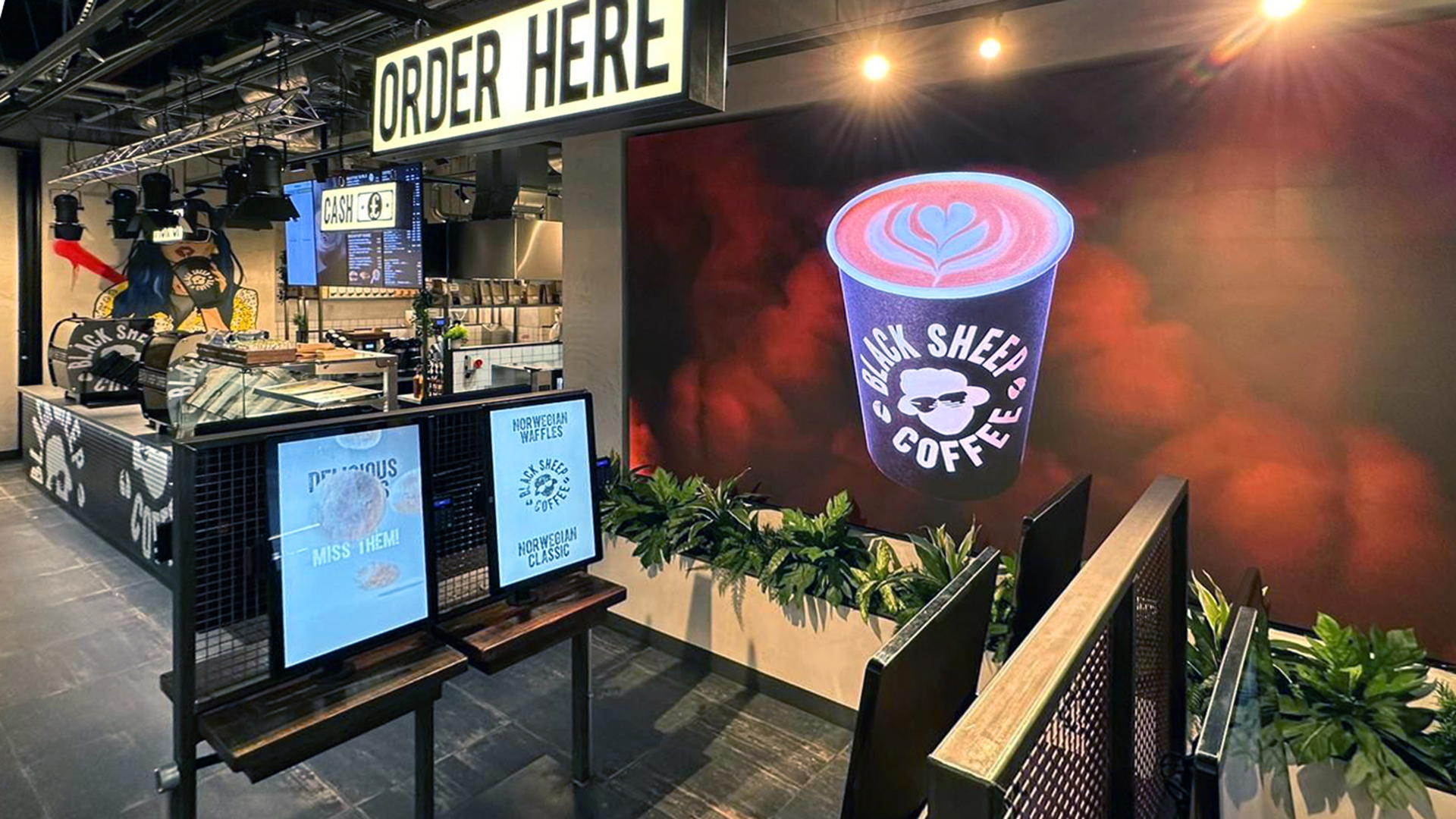
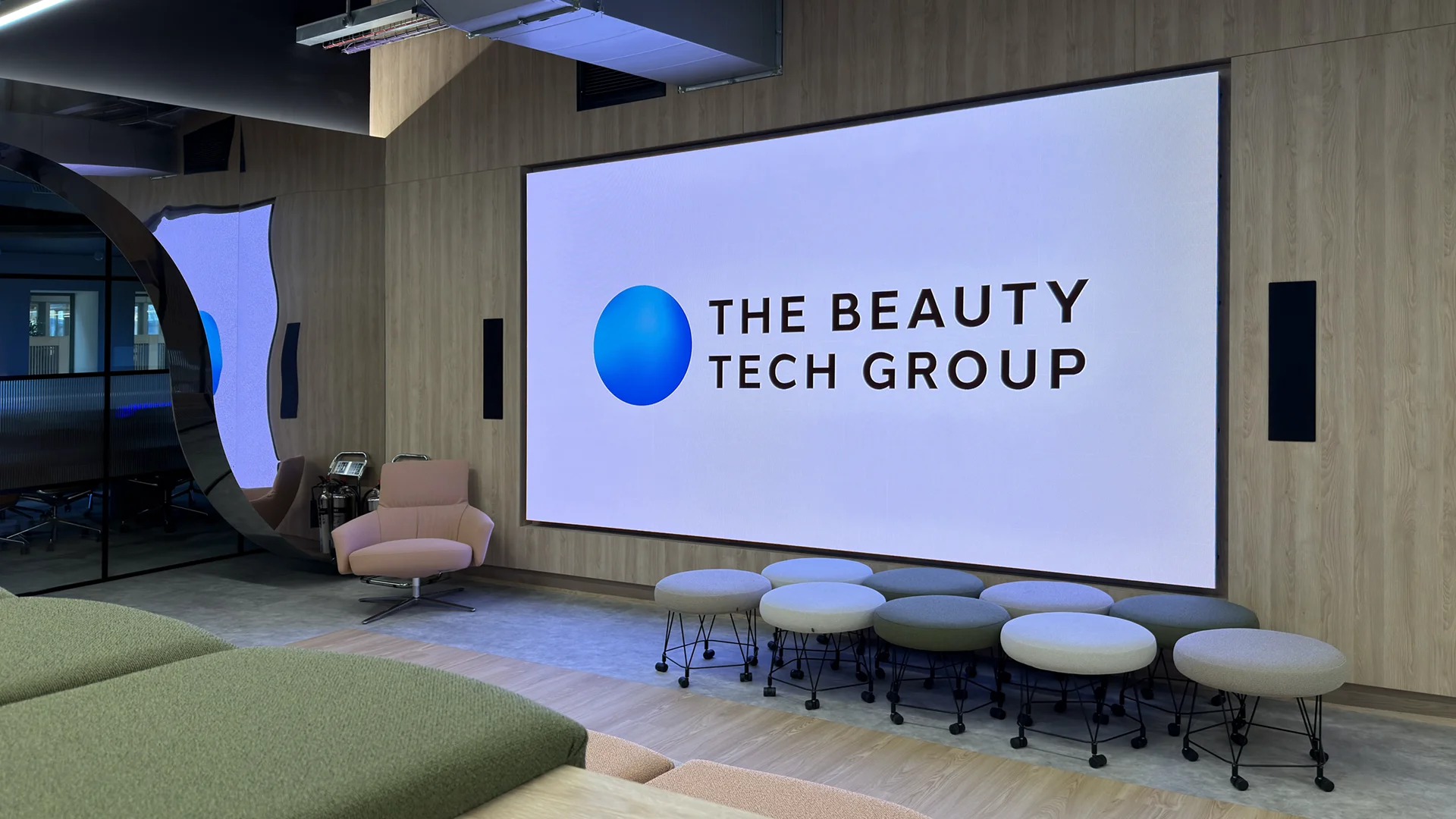
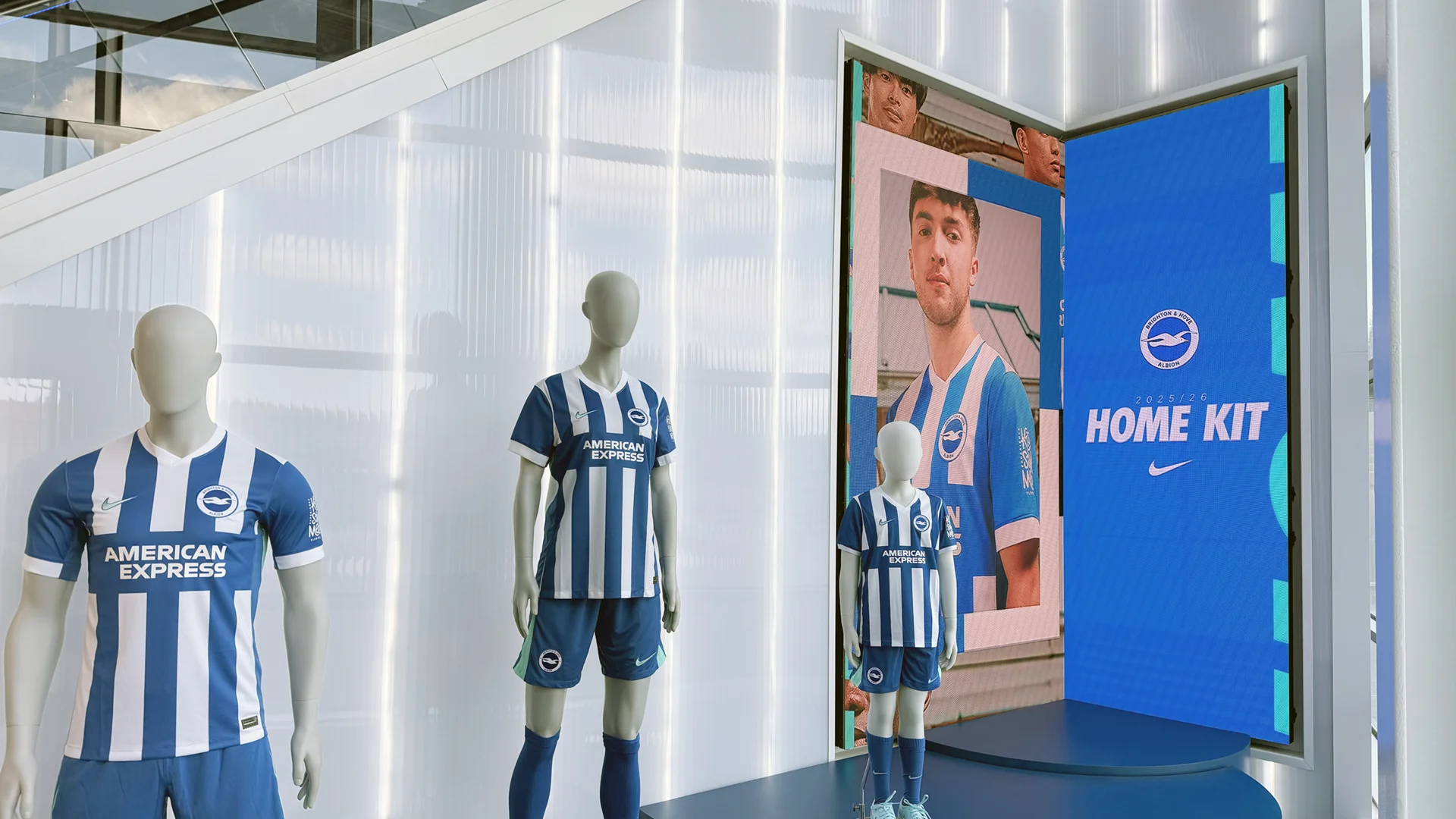
Indoor LED walls: From immersive full-wall installations in boardrooms and premium hospitality spaces, to large-format feature walls in retail flagship stores and hotel lobbies, indoor LED walls deliver pixel pitches from 0.8mm to 4mm and brightness up to 5,000 nits. Modular construction enables bespoke shapes including curves, right angles and non-standard configurations.
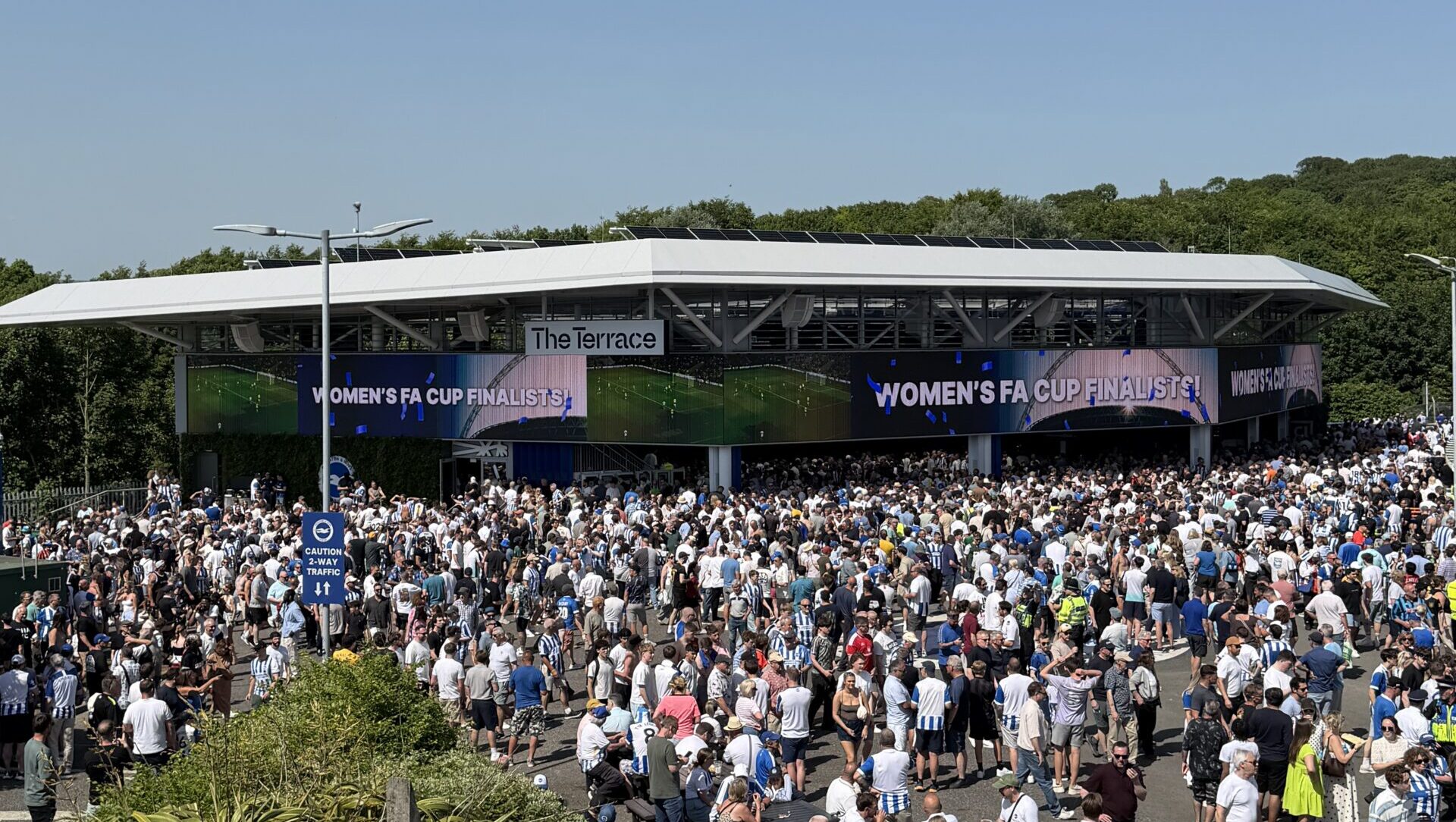
Outdoor LED: High-brightness LED solutions for stadium exteriors, outdoor retail, venue concourses and public-facing environments — built for 24/7 operation with signal and power redundancy for environments where downtime is not acceptable.
Transparent glass LED: One of the most architecturally distinctive applications of LED technology; transparent LED panels can be integrated into glass facades, windows and balustrades, overlaying digital content on the physical environment without blocking light or sightlines. LED balustrades are a particularly striking application in stadium fanzones, retail environments and hospitality spaces.
Ribbon LED: Elongated LED strips for architectural feature use — running along stair edges, counter fronts, ceiling lines and structural features to add dynamic content capability to architectural elements.
‘Wallpaper’ LED: Ultra-fine pixel pitch LED designed to be installed flush against surfaces, replicating natural finishes or functioning as an ambient art canvas — creating environments that shift and respond without dominating the space.
General specs
Our LED wall solutions, at a glance:
We utilise LED solutions from industry-leading manufacturers like Samsung, Absen, Nexnovo and many more.
What is the difference between LED displays and standard commercial screens?
Standard commercial displays use LCD panels with LED backlighting, while true LED displays consist entirely of LED modules arranged in a matrix — providing significantly higher brightness, a wider range of achievable sizes, modular scalability and the ability to create non-standard shapes and configurations that are impossible with LCD panels.
What pixel pitches are available for LED display walls?
Our LED wall range covers pixel pitches from 0.8mm (for close-viewing premium applications) to 6mm (for larger-scale environments where viewing distance is greater), with indoor and outdoor variants available across this range.
What is transparent LED and where is it used?
Transparent LED utilises LED modules embedded directly into a glass panel, allowing content to be displayed on windows, facades, balustrades and partitions — while maintaining a significant degree of light transmission and visibility through the panel. This makes them ideal for architectural integration in retail, hospitality and venue environments where maintaining sightlines is important.
Can LED displays be installed outdoors?
Yes. Our outdoor LED range is designed for all-weather operation with IP-rated protection, automatic brightness adjustment for ambient light conditions, and signal and power redundancy for environments requiring continuous operation.
How do you maintain LED display walls?
LED walls are maintained at module level; individual LED modules can be replaced without disturbing the rest of the installation, which is a significant advantage over LCD displays where a failed panel typically requires complete replacement. Our maintenance and support service includes remote monitoring of LED installations and a structured response protocol for module failures.
Bank Chambers,
Lower Ground Floor
375 Regents Park Road,
London, N3 1DE
We use cookies to improve your experience on our site. By using our site, you consent to cookies.
Manage your cookie preferences below:
Essential cookies enable basic functions and are necessary for the proper function of the website.
You can find more information in our Privacy & Cookies and Privacy & Cookies.